E-commerce and DTC M&A
Brands are worth what their customers come back for.
Acquisition cost, repeat purchase and channel dependence decide what a consumer brand is worth. Pactlab’s cohort and concentration engine already measures them — the pack adds storefront and ad-platform sources.
Planned. Industry packs are built only after the software baseline is proven with pilot customers, in the order shown. A design partner in this sector can help shape the pack.
Where these deals go wrong
Aggregators and roll-ups acquiring consumer and direct-to-consumer brands.
Acquisition cost that keeps rising
Blended CAC hides channels that no longer pay back.
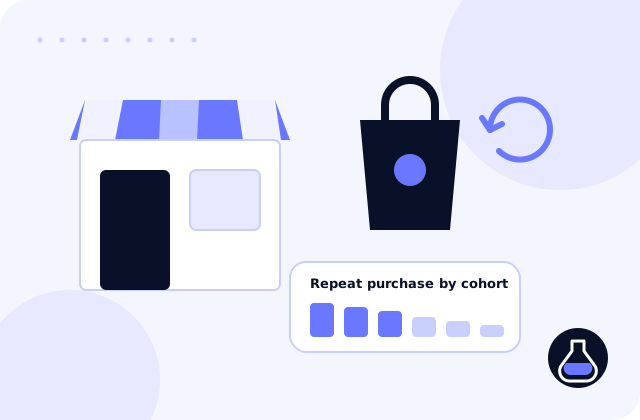
Repeat purchase that fades by cohort
Lifetime value built on early cohorts may not hold for later ones.
One marketplace holding the brand
Channel concentration is platform risk you inherit.
The questions that decide the deal
- What does it really cost to acquire a customer, and what are they worth?
- How often do customers come back?
- How dependent is the brand on one marketplace or ad channel?
How a e-commerce and dtc deal would run
An illustrative walk through the decision loop once the pack is built.
01 · Evidence
Storefront and marketplace orders, ad-platform spend and supplier terms.
02 · Finding
CAC, LTV, repeat-purchase and channel findings are drafted from the order and spend data.
03 · Review
Reviewers decide each with the cohort rows in view.
04 · Valuation
Valuation methods apply unchanged, with unit-economics inputs.
05 · Deal terms
Price adjustments and earn-outs linked to the unit economics.
What it finds — and what that becomes in the deal
Illustrative examples of findings and the terms they turn into. Every real finding carries citations and a named reviewer.
- High severityExample
Repeat purchase declining in recent cohorts
Order history by first-purchase month
Lifetime-value case in the valuation
- Medium severityExample
Majority of revenue through one marketplace
Orders by channel
Channel-risk adjustment
What carries over from the core
These parts of Pactlab apply to the sector as they are.
Cohorts
Repeat purchase and lifetime value use the cohort machinery.
Concentration
Channel and marketplace concentration uses the existing analysis.
Contract review
Marketplace and supplier terms with exact citations.
Valuation
Valuation methods apply unchanged.
What the industry pack adds
New sources, finding types and valuation inputs — plugged into the unchanged core.
Storefront and marketplace data
Adapters for storefronts and marketplaces.
Ad-platform spend
Acquisition cost from ad-platform evidence.
Unit-economics findings
CAC, LTV and channel-risk findings.
What you walk away with
Unit economics from the source
CAC and LTV from orders and spend, not from a summary.
Cohorts that show the trend
Repeat purchase by first-purchase month.
Channel dependence
Where the revenue comes from, and how concentrated it is.
Questions buyers ask
Can we use Pactlab for a e-commerce and DTC deal today?
The e-commerce and DTC pack is planned, not built. Pactlab is proving its software baseline with pilot customers first. If the target has a software business, the software modules apply today — and design partners in e-commerce and DTC help decide what the pack reads and checks first.

Buying in e-commerce and dtc?
Design partners in this sector help decide what the pack reads and checks first. Talk to us.